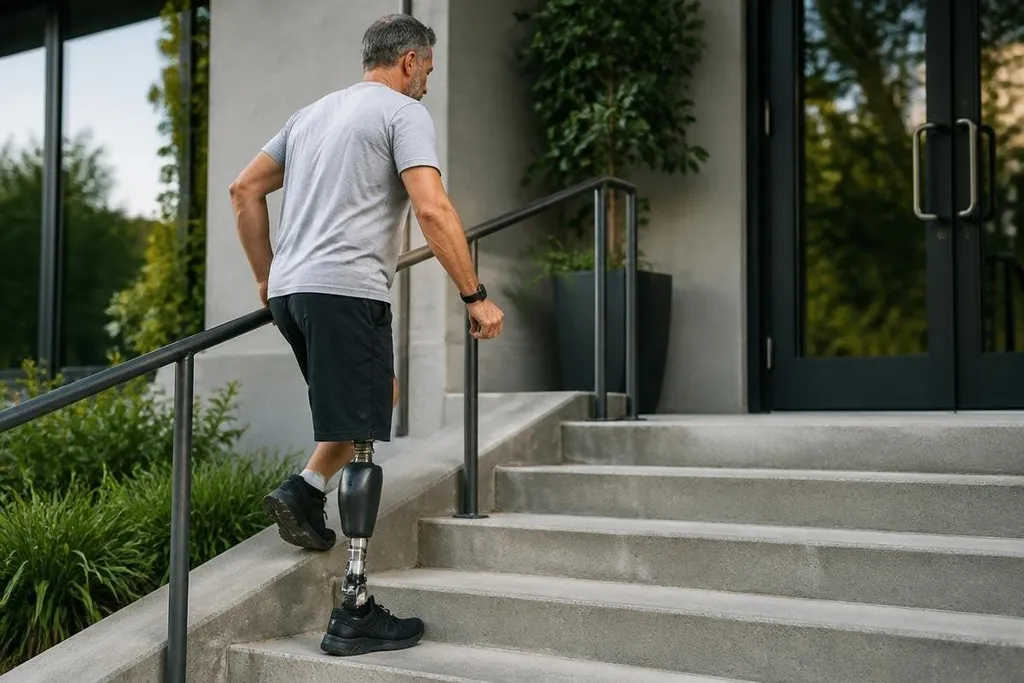
A robotic prosthesis can move a hand, foot, or knee with motors and sensors. The harder task is making that movement useful for hours each day, across stairs, door handles, uneven ground, and changing grip needs.
This is what the next stage of prosthetic robotics must prove: control that feels natural, power that lasts, and parts that can be repaired without a long wait.
- Movement must match the user’s intent with little delay.
- Batteries and motors must fit daily routines.
- Clinics need clear data, service plans, and safe adjustment steps.
Control must follow the user
A powered prosthesis needs a way to read intent. Some designs use signals from muscles, often called electromyography or EMG. Others may use pressure sensors, motion sensors, or switches that the user controls directly.
The signal is only the start. Software must turn it into a motor command, then adjust that command as the limb moves.
A hand closing around a paper cup needs a different response from a hand holding a tool. Too much force can damage the object. Too little can make the grip fail.
That control loop also needs to cope with noise. Sweat, movement, socket fit, and changes in muscle effort can affect the signal. A system that works in a clinic for a short session still needs proof across a full day of ordinary use.
The socket and skin still decide a lot
Motors and sensors get most of the attention, but the socket remains the part that connects the device to the body. A poor fit can cause pressure, pain, or movement that the control system reads badly.
This makes the fitting process part of the robot. A prosthesis may have accurate motors and useful software, yet still fail if the socket shifts during walking or gripping. Future designs need clear ways to adjust fit as the user’s body changes.
Comfort also affects adoption. A device that needs frequent charging, careful cleaning, or a complex fitting routine can lose value outside the clinic. The useful measure is the number of ordinary tasks a person can complete without stopping to manage the device.
Battery life sets the daily limit
A motor needs power for every movement. More force, faster motion, and heavier loads use more energy, so designers must choose where the device spends its battery.
A smaller battery can reduce weight, but it may cut working time. A larger battery can extend use, but it adds mass to the limb or socket. The right choice depends on the user’s task, body strength, work day, and access to charging.
The battery question also affects safety. A user needs a clear warning before power runs low, along with a safe mode that lets the limb stop or move without a sudden loss of control. Public product claims should show test methods, load conditions, and the point at which performance drops.
A prosthetic limb's test result needs its sensor setup, load, test date, and trial setting beside it. Prosthetic robotics reporting from Robot24.com can give you that record before the next section asks what still needs proof.
What still needs proof
The field has a hard measurement problem. A lab can record movement speed or grip force, but those numbers don't explain how often a person uses the device, how much help they need, or why they stop using it.
Useful evidence should include the task, the setting, the test length, and the number of people involved. It should also report failures. A device that works for one motion but struggles with fast changes in direction needs a clear description of that limit.
I’d wait for long-use data before calling any prosthetic robot ready for broad daily use. Short demonstrations can show that a system works once; they don't show that it remains comfortable, safe, and serviceable over months.
A practical test plan
A clinic, buyer, or development team can ask for these checks before choosing a device:
- Control delay: record the time between the user’s intent and the motor response.
- Grip range: test light objects, soft objects, and tools with different shapes.
- Fit changes: check movement after walking, sitting, sweating, and repeated socket use.
- Battery record: measure working time under the tasks the user performs each day.
- Failure mode: confirm what the limb does after a sensor fault or low-battery warning.
- Service path: ask who can repair the device and how long common parts take to arrive.
The next useful step is clearer evidence from longer trials, with daily tasks and reported failures included beside speed and force measurements. Until that arrives, the best prosthetic robot will be the one a person can wear, charge, adjust, and repair through an ordinary week.